For years, the cornerstone of property marketing has been a stunning set of professional photographs. But as we look towards 2026, the debate over real estate video vs photos is heating up, with compelling data suggesting a clear winner in the race to capture buyer attention and sell properties faster. While high-quality images remain essential, the digital landscape has evolved. Today's buyers don't just want to see a property; they want to experience it. And that's where video transforms the game.
The Undeniable Power of Professional Photography
Let's be clear: professional real estate photography is not going anywhere. It is the absolute foundation of any successful property listing. High-resolution, well-lit, and expertly composed images are non-negotiable. They are the initial hook that stops a potential buyer from scrolling, drawing them in for a closer look.
Photography excels at:
- Making a Strong First Impression: On property portals like Domain and Rightmove, your hero shot is your one chance to make an impact.
- Highlighting Key Details: A crisp photo can perfectly capture the intricate tile work in a bathroom, the high-end appliances in a kitchen, or the beautiful grain of a timber floor.
- Versatility in Marketing: Photos are crucial for print materials, digital brochures, social media carousels, and the primary gallery on your listing page.
Think of photography as the essential language of real estate marketing. But in 2026, speaking this language is simply the baseline. To truly stand out and connect with buyers, you need to be fluent in video, too.
The Rise of Video: Capturing More Than Just a Room
While a photograph shows a space, a video tells its story. It conveys a sense of flow, scale, and atmosphere that static images simply cannot replicate. A well-crafted video tour allows a potential buyer to walk through the home virtually, understanding the layout and how rooms connect in a way that clicking through a photo gallery can't match.
This immersive experience builds a powerful emotional connection. Zillow's data backs this up, showing that listings with a video walkthrough received twice the page views and were saved by users far more often than those without. Buyers aren't just looking at a house; they are imagining their life there. Video makes that visualisation seamless and compelling.
Furthermore, video helps buyers understand the property's context. An incredible 86% of buyers use video to research a specific community. You can use video to showcase not just the four walls of a home, but the lifestyle that comes with it—the local café, the nearby park, or the stunning coastal walk just minutes away.
Real Estate Video vs Photos: The Data-Driven Verdict
When we move past feelings and look at the hard numbers, the argument for video becomes undeniable. The core question for any agent, host, or property marketer is whether the investment leads to better results. The data provides a resounding "yes."
The single most compelling statistic comes from industry research showing that property listings with video receive a staggering 403% more inquiries than those without. Let that sink in. That’s four times the number of potential buyers reaching out, dramatically increasing the chances of a faster sale at a better price.
This influx of interest directly addresses the central question of real estate video vs photos. More inquiries lead to more inspections, which in turn creates more competition and a stronger negotiating position for your vendor. If you're wondering does video increase real estate enquiries in the Australian, NZ, and UK markets, the evidence is overwhelming. In a competitive market, an advantage of this magnitude is too significant to ignore.
Winning Listings and Building Your Brand with Video
The benefits of video extend far beyond a single listing. Integrating video into your marketing toolkit is a powerful strategy for winning new business and building your professional brand.
Consider this: 73% of homeowners say they are more likely to list their property with an agent who uses video. When you walk into a listing presentation and showcase your high-quality video marketing, you immediately differentiate yourself from competitors who are still relying solely on photos. You present yourself as a modern, tech-savvy agent who invests in the best tools to achieve the best outcome for their clients.
The ripple effects on your broader marketing are also significant:
- Social Media Dominance: Social media posts with video get 48% more views. A cinematic property tour is perfect, shareable content for Instagram, Facebook, and LinkedIn.
- YouTube as a Resource: With 51% of buyers using YouTube for research, creating a channel of your property tours builds a long-term marketing asset that attracts future clients.
Consistently using video isn't just about selling one property; it's a core component of a successful, forward-thinking business. Integrating video is a cornerstone of any effective real estate video marketing guide for 2026.
Overcoming the Traditional Hurdles of Video Production
So, if video is so effective, why isn't everyone using it for every single listing? Historically, the barriers have been significant: time and money. Hiring a professional videographer, scheduling a separate shoot, and waiting days or weeks for editing has been a costly and time-consuming process, often reserved for only the most high-end properties.
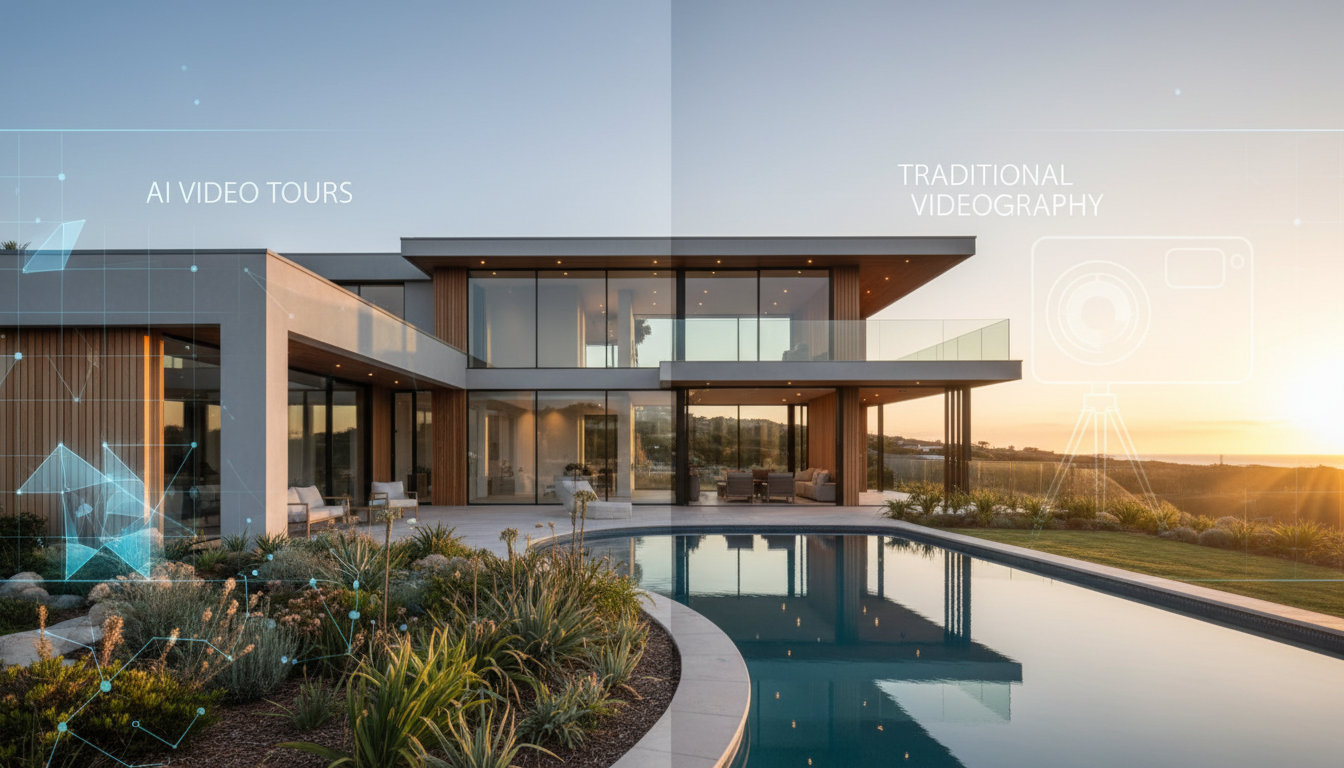
This is where the conversation about real estate video vs photos gets a modern twist. Technology is rapidly closing the gap, making high-impact video accessible to everyone. The debate over AI video tours vs traditional videographer costs is highlighting a major shift in the industry.
AI-powered platforms like Vinto are revolutionising this workflow. Instead of a separate video shoot, you can now leverage the professional photos you already have. By simply uploading your existing property images, Vinto's AI analyses them and, in under an hour, generates a smooth, cinematic video walkthrough complete with dynamic camera movements, transitions, and background music. You get the engagement power of a video tour at a fraction of the cost and time, making it viable for every single listing, from a studio apartment to a luxury estate.
The Final Word: It's Not a Competition, It's an Evolution
As we look to 2026, the discussion of real estate video vs photos is less about one replacing the other and more about a strategic evolution. Professional photography is the price of entry, but cinematic video is your ticket to winning. Video provides the narrative, the emotion, and the engagement that drives more inquiries and, ultimately, faster sales.
With innovative tools now removing the traditional barriers of cost and time, there’s no longer a reason to choose. You can have the best of both worlds. By transforming your essential photos into compelling video tours, you can ensure every property you market is optimised to capture the hearts and minds of modern buyers.